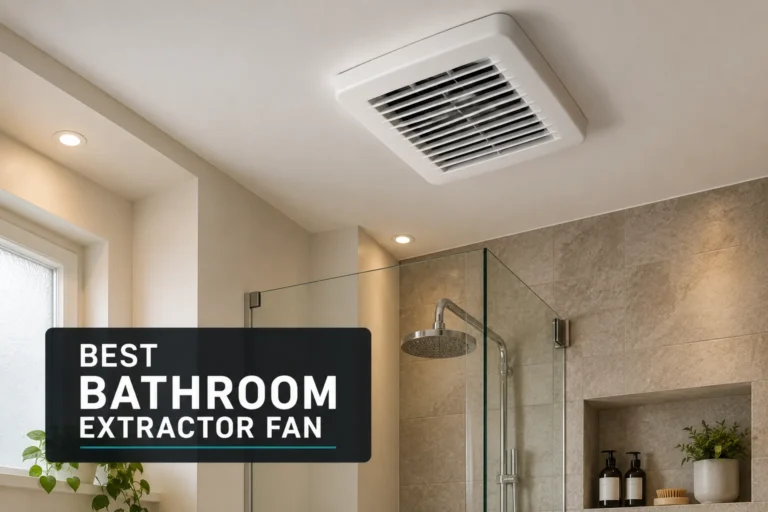
Bathrooms generate more moisture than almost any other room in the home. Hot showers, baths, and daily use release steam that can quickly lead to condensation, mould growth, peeling paint, and unpleasant odors if ventilation is inadequate.
That’s why finding the best bathroom extractor fan is about more than convenience. A quality extractor fan helps protect your home, improves indoor air quality, and keeps your bathroom comfortable year-round. Modern models are quieter, more energy-efficient, and smarter than ever, with features such as humidity sensors, timers, and continuous ventilation modes.
This guide explains what makes a bathroom extractor fan effective, the key features to consider, and how to choose the right model for your space.
What Is a Bathroom Extractor Fan?
A bathroom extractor fan is a ventilation device designed to remove humid air, odors, and airborne pollutants from a bathroom. It works by pulling moist air out of the room and venting it outdoors, reducing the likelihood of condensation and mould development. Proper ventilation is considered an essential part of modern bathroom design.
Building regulations in many regions require adequate bathroom ventilation, especially in windowless bathrooms where natural airflow is limited. Extractor fans provide a reliable way to control moisture levels and maintain a healthier indoor environment.
Why a Good Extractor Fan Matters
Prevents Condensation and Mould
The primary purpose of an extractor fan is moisture control. When warm steam meets cooler surfaces such as mirrors, walls, and ceilings, condensation forms. Over time, persistent moisture can lead to mould growth and structural damage.
A properly sized fan removes humid air before it settles on surfaces, helping to keep the room dry and reducing maintenance issues.
Improves Indoor Air Quality
Bathrooms can trap odors, cleaning product fumes, and airborne contaminants. Effective ventilation helps remove these particles and introduces fresher air into the space.
This is particularly important in modern homes, where improved insulation often reduces natural airflow between rooms.
Protects Decorations and Fixtures
Excess moisture can damage paint, wallpaper, wooden cabinets, and even grout lines. Installing a high-quality extractor fan can extend the life of bathroom finishes and reduce the need for costly repairs.
The investment in proper ventilation often pays for itself through reduced maintenance and fewer moisture-related problems.
Features to Look for in the Best Bathroom Extractor Fan
Airflow Performance
Airflow is arguably the most important specification. It measures how much air the fan can remove within a given period.
Industry guidance generally recommends a minimum extraction rate of 15 litres per second for bathroom ventilation, although larger bathrooms may require significantly more airflow.
When comparing products, look for airflow ratings listed as:
- Litres per second (L/s)
- Cubic metres per hour (m³/h)
- Cubic feet per minute (CFM)
Higher airflow is not always better. The goal is to match the fan’s capacity to the size of the room.
Noise Level
Many homeowners regret buying a fan that sounds like an aircraft taking off every time the bathroom light is switched on.
Modern “silent” extractor fans often operate below 30 decibels, making them suitable for family homes and en-suite bathrooms. Fans specifically engineered for low-noise operation typically use improved motor technology and better airflow design.
A quieter fan is more likely to be used consistently, which improves long-term ventilation performance.
Humidity Sensors
Humidity-sensing fans automatically activate when moisture levels rise above a set threshold.
This feature is particularly useful because it responds to actual best bathroom extractor fan conditions rather than relying on users to remember to switch the fan on. For homes struggling with condensation, a humidistat-equipped fan is often one of the most effective solutions.
Timer Function
Timer fans continue running for several minutes after the light has been switched off.
This allows the fan to remove lingering moisture after a shower or best best bathroom extractor fan extractor fan. Typical timer settings range from five to twenty minutes and can significantly improve moisture control.
Types of Bathroom Extractor Fans
Axial Fans
Axial best bathroom extractor fan are among the most common and affordable options. They work best bathroom extractor fan when installed directly through an external wall or window.
Because they are designed for shorter duct runs, they are ideal for best bathroom extractor fan where the fan can vent directly outside.
Centrifugal Fans
Centrifugal fans generate greater air pressure than axial models. This makes them better suited to best bathroom extractor fan with longer duct runs or more complex ventilation layouts.
Although they tend to cost more, they often provide superior extraction performance in challenging installations.
Inline Fans
Inline extractor fans are mounted within the ducting rather than directly in the best bathroom extractor fan wall or ceiling.
Many homeowners choose inline systems because the motor is located away from the room, reducing perceived noise levels. These fans are particularly popular in loft spaces and high-end bathroom renovations. Community feedback consistently highlights their ability to combine strong airflow with quiet operation.
Continuous Running Fans
Continuous ventilation fans operate at a low background rate throughout the day and automatically boost when additional extraction is required.
This approach provides constant air movement and can be highly effective in homes where condensation is an ongoing issue.
Bathroom Safety and IP Ratings
Understanding Bathroom Zones
Bathrooms are divided into safety zones based on their proximity to water sources. The closer a fan is installed to a bath or shower, the higher its required water-resistance rating.
These regulations help ensure electrical safety in wet environments.
Choosing the Correct IP Rating
Most modern best bathroom extractor fan extractor fans designed for wet areas carry an IPX4 rating or higher.
For installations in Zone 1 or Zone 2, an IPX4-rated fan is generally considered the minimum requirement. Always check local electrical regulations and manufacturer guidance before installation.
Popular Extractor Fan Brands
Several manufacturers consistently receive positive feedback from reviewers, installers, and homeowners.
EnviroVent
EnviroVent is widely recognized for producing quiet, high-performance extractor fans. Their silent ranges are frequently recommended for bathrooms where noise reduction is a priority.
Vent-Axia
Vent-Axia has a long-standing reputation in residential ventilation. Models within its silent and continuous-running ranges are popular for both renovations and new builds.
Xpelair
Xpelair offers reliable fans with options that include humidity sensors, timers, and low-noise operation. Many homeowners choose the brand for its balance of performance and affordability.
Airflow
Airflow’s iCON series is frequently recommended for homeowners seeking a premium design and strong extraction performance.
Manrose
Manrose remains one of the most widely available and budget-friendly ventilation brands. While entry-level models are popular, some users prefer premium alternatives when maximum performance or noise reduction is a priority.
How to Choose the Best Bathroom Extractor Fan
The ideal fan depends on your bathroom layout, ventilation needs, and budget.
Consider the following factors:
- Bathroom size
- Length of duct run
- Noise tolerance
- Presence of a shower or wet room
- Humidity levels
- Available installation location
- Desired smart features
A small family bathroom with a short external wall connection may only need a simple axial fan. A larger best bathroom extractor fanwith persistent condensation may benefit from a humidistat-equipped centrifugal or continuous-running system.
Frequently Asked Questions
Q: What is the best bathroom extractor fan for preventing mould?
A: A fan with strong airflow and a built-in humidity sensor is usually the most effective choice. Humidity-sensing models respond automatically to moisture levels and continue extracting air until conditions improve.
Q: Are silent bathroom extractor fans worth it?
A: Yes. Quiet fans encourage regular use and are particularly valuable in en-suite bathrooms or family homes. Many modern silent models provide excellent extraction without excessive noise.
Q: Should I choose an inline or wall-mounted fan?
A: Inline fans are often quieter because the motor is located away from the best bathroom extractor fan. Wall-mounted fans are generally easier and less expensive to install. The best choice depends on your property’s layout.
Q: How long should a bathroom extractor fan run after a shower?
A: Ventilation experts commonly recommend allowing the fan to run for at least 10 to 15 minutes after showering to remove excess moisture effectively.
Q: What size extractor fan do I need?
A: The required airflow depends on room size, moisture levels, and duct length. Most standard bathrooms need at least the minimum extraction rate recommended by ventilation regulations, while larger spaces may require more powerful systems.
Conclusion
Choosing the best bathroom extractor fan is one of the smartest investments you can make for your home’s comfort and long-term maintenance. The right fan helps prevent condensation, reduces mould risk, improves air quality, and protects your bathroom from moisture damage.
Rather than focusing solely on price, consider airflow performance, noise levels, humidity sensing, installation requirements, and safety ratings. Whether you choose a simple wall-mounted unit or a premium continuous-running system, effective ventilation will make your bathroom cleaner, healthier, and more comfortable for years to come.