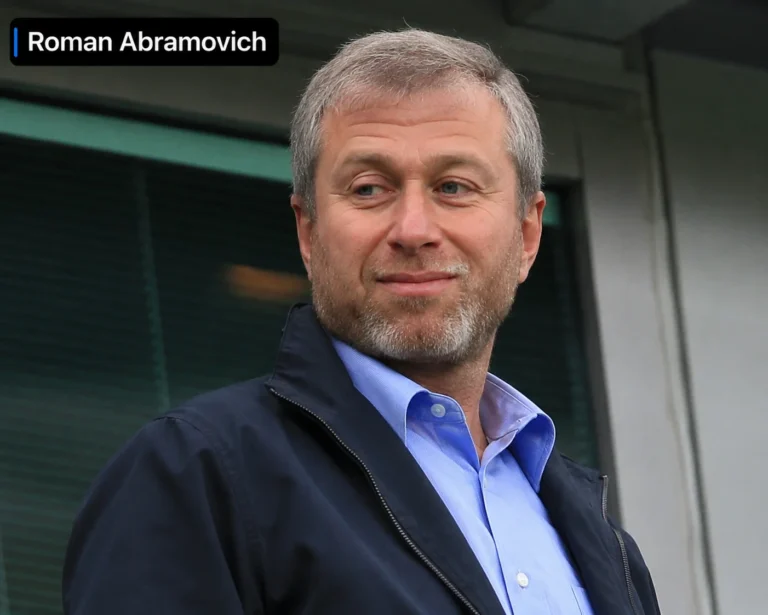
Roman Abramovich is one of the most recognizable figures in modern business and sports. Best known as the former owner of Chelsea Football Club, he built a vast fortune during Russia’s post-Soviet economic transformation and became one of the world’s most influential billionaires.
Over the past three decades, Roman Abramovich has been associated with major business deals, political roles, high-profile investments, philanthropy, and international controversy. His ownership of Chelsea transformed the club into a global football powerhouse, while recent geopolitical developments placed him under intense international scrutiny. This article examines his life, career, achievements, and lasting impact on business and sport.
Who Is Roman Abramovich? A Short Biography
| Detail | Information |
|---|---|
| Full Name | Roman Arkadyevich Abramovich |
| Date of Birth | October 24, 1966 |
| Age | 59 (as of 2026) |
| Birthplace | Saratov, Russian SFSR, Soviet Union |
| Nationality | Russian, Israeli, Portuguese |
| Profession | Businessman, Investor, Former Politician |
| Education | Moscow State Law University; Russian State University of Oil and Gas |
| Famous For | Former Owner of Chelsea FC, Business Investments |
| Years Active | 1980s–Present |
| Children | 7 |
| Source of Income | Investments, Energy, Metals, Private Equity |
| Known Companies | Millhouse Capital, Sibneft (former owner), Evraz |
Early Life and Background
A Difficult Beginning
Roman Abramovich was born on October 24, 1966, in Saratov, then part of the Soviet Union. His early years were marked by tragedy. He lost both parents at a young age and was raised by relatives in northern Russia.
Growing up during the Soviet era meant living in an environment far different from the market-driven economy that would later create opportunities for entrepreneurs. Despite these challenges, Abramovich developed a reputation for ambition and adaptability from an early age.
Entering Business During a Time of Change
The collapse of the Soviet Union in the early 1990s created unprecedented opportunities for private enterprise. Like many emerging entrepreneurs of the period, Abramovich became involved in trading and investment ventures.
He participated in various businesses before gaining significant attention through investments in Russia’s natural resources sector. These opportunities would eventually place him among the wealthiest individuals in the country.
Building a Billion-Dollar Business Empire
The Sibneft Deal
A major turning point in Roman Abramovich career came with the acquisition of a significant stake in the oil company Sibneft during Russia’s privatization era. The company quickly became one of the country’s most valuable energy assets. Later, Sibneft was sold to Gazprom in a multibillion-dollar transaction that dramatically increased Roman Abramovich wealth.
The deal remains one of the most discussed transactions in modern Russian business history. Supporters viewed it as a remarkable example of strategic investment, while critics questioned aspects of the privatization process that created many of Russia’s oligarch fortunes.
Millhouse Capital and Diversification
Following the success of his energy investments, Abramovich expanded into multiple sectors through Millhouse Capital, his investment vehicle. His interests stretched across mining, steel, infrastructure, and international investments.
Rather than focusing on a single industry, he adopted a diversified approach that helped preserve and grow wealth across changing economic conditions. This strategy contributed to his status as one of the world’s wealthiest businessmen for many years.
Political Involvement
Beyond business, Abramovich also entered public service. He served as Governor of the Chukotka Autonomous Okrug in Russia from 2000 to 2008 after previously serving in the State Duma.
His tenure attracted attention because he reportedly invested significant resources into regional development projects. Supporters argued that these investments improved infrastructure and living standards in one of Russia’s most remote regions.
The Chelsea FC Revolution
Purchasing Chelsea
In 2003, Roman Abramovich purchased Chelsea Football Club in a deal that changed the landscape of English football. At the time, Chelsea was a respected club but not yet among the dominant forces in European football.
His arrival marked the beginning of a new era characterized by significant investment in players, facilities, and infrastructure. The acquisition also introduced a new model of wealthy ownership that would later become common across elite football.
Transforming the Club
Abramovich invested heavily in the squad and football operations. Within a short period, Chelsea became one of Europe’s strongest teams.
During his ownership, the club won numerous major honors, including:
- Premier League titles
- FA Cups
- League Cups
- UEFA Champions League titles
- UEFA Europa League titles
- FIFA Club World Cup
Chelsea captured 21 major trophies during the Abramovich era, making it one of the most successful periods in the club’s history.
Impact on English Football
The Chelsea project reshaped football economics. Large-scale investment in elite talent became increasingly common among top clubs seeking competitive advantages.
Many analysts consider Abramovich’s arrival one of the defining moments in Premier League history. His approach accelerated the globalization and commercialization of English football while raising competitive standards across the league.
Business Reputation and Public Perception
Admiration and Criticism
Roman Abramovich has long attracted both admiration and criticism.
Supporters often point to his business success, philanthropic efforts, and transformation of Chelsea. They view him as a visionary investor who recognized opportunities during a period of massive economic change.
Critics, however, have frequently questioned the origins of wealth accumulated by Russian oligarchs during the privatization era. Various investigations and legal disputes over the years have contributed to ongoing debate regarding the business environment in which these fortunes were created.
A Private Public Figure
Unlike many billionaires, Abramovich has generally maintained a low public profile. He rarely grants interviews and often avoids public appearances unrelated to business or football.
This reserved approach has contributed to an aura of mystery around his personal life and decision-making. While many public figures actively seek media attention, Abramovich has largely allowed his business activities and investments to speak for themselves.
Philanthropy and Social Projects
Throughout his career, Abramovich has supported numerous charitable and educational initiatives. Reports have highlighted contributions to regional development projects, cultural institutions, and youth programs.
During his time at Chelsea, the club also expanded community outreach and charitable initiatives through the Chelsea Foundation and other social programs.
Sanctions and the Sale of Chelsea
The Impact of 2022
Following Russia’s invasion of Ukraine in 2022, governments in the United Kingdom and the European Union imposed sanctions on several prominent Russian businessmen, including Abramovich. These sanctions significantly affected his international business activities and assets.
The measures created immediate uncertainty around Chelsea Football Club and ultimately led to the club’s sale.
Selling Chelsea FC
Abramovich announced his decision to sell Chelsea in 2022. A consortium led by Todd Boehly and Clearlake Capital eventually completed the acquisition, ending nearly two decades of ownership.
The sale marked the conclusion of one of the most influential ownership periods in football history. Many supporters viewed it as the end of an era that fundamentally changed the club’s trajectory.
Ongoing Discussions
Questions surrounding the proceeds from the Chelsea sale have continued to attract attention. Reports indicate ongoing discussions regarding the distribution of funds and charitable commitments connected to the transaction.
At the same time, Abramovich remains the subject of continuing media coverage related to sanctions, legal matters, and business investigations. Allegations have been reported, while his representatives have repeatedly denied wrongdoing and noted that he has not been convicted of any related offenses.
Personal Life
Family and Relationships
Roman Abramovich is the father of seven children and has been married more than once. His personal life has occasionally drawn media attention, particularly because of his high-profile status and substantial wealth.
Despite public interest, he generally keeps family matters private and rarely comments on personal issues.
International Lifestyle
Over the years, Abramovich has owned properties in multiple countries and maintained international business interests. His citizenship ties to Russia, Israel, and Portugal have further emphasized his global presence.
His lifestyle, including yachts, real estate holdings, and international travel, has often been highlighted in media coverage surrounding billionaire culture.
Frequently Asked Questions
Q: How did Roman Abramovich become rich?
A: Abramovich built his fortune through investments during Russia’s post-Soviet privatization era. His most significant success came through ownership of the oil company Sibneft, which was later sold to Gazprom in a multibillion-dollar deal.
Q: Why is Roman Abramovich famous?
A: He is best known internationally as the former owner of Chelsea Football Club. He also gained recognition through major investments in Russia’s energy and industrial sectors and his role as one of the country’s most prominent businessmen.
Q: How long did Roman Abramovich own Chelsea?
A: Abramovich owned Chelsea from 2003 until 2022. During that period, the club experienced the most successful era in its history, winning numerous domestic and international trophies.
Q: What happened to Roman Abramovich after Chelsea was sold?
A: Following the sale, Abramovich largely stayed out of football ownership. Public attention has focused on sanctions, legal matters, and discussions regarding the proceeds from Chelsea’s sale.
Q: Does Roman Abramovich still have business interests?
A: Yes. Although some assets have been affected by sanctions and regulatory actions, Abramovich remains associated with investment holdings and business interests developed over decades in energy, metals, and finance.
Conclusion
Roman Abramovich remains one of the most influential and controversial figures in modern business and sports. His rise from a challenging childhood to becoming a billionaire investor reflects the dramatic economic transformation that followed the collapse of the Soviet Union.
While debates continue about his business legacy and political associations, his impact on football is undeniable. The Chelsea era reshaped the club, altered the Premier League’s competitive landscape, and established a model of ownership that influenced the global game. Whether viewed as a visionary entrepreneur, a transformative football owner, or a symbol of Russia’s oligarch era, Roman Abramovich’s story continues to be one of the most significant and closely watched narratives in contemporary business history.