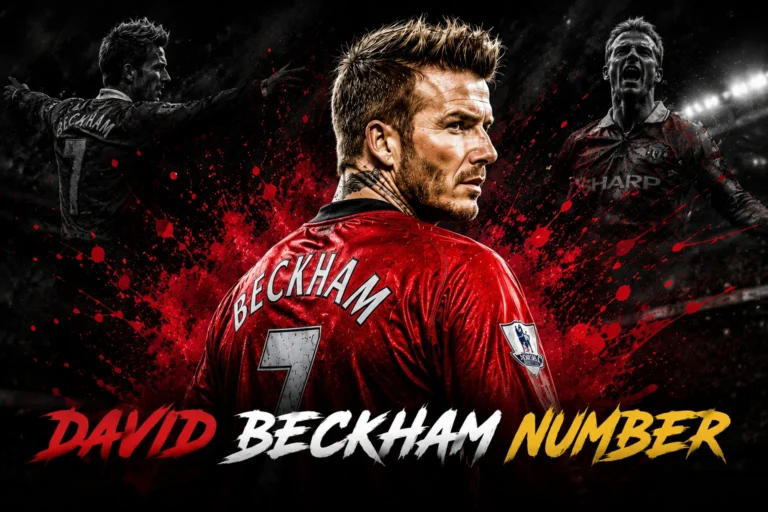
The David Beckham number is one of the most searched topics among football fans, and for good reason. Throughout his remarkable career, Beckham wore several jersey numbers that became closely linked with some of football’s greatest moments. From his famous No. 7 shirt at Manchester United to his time wearing different numbers for England, Real Madrid, and other clubs, each jersey tells part of his story.
David beckham number few footballers have made a shirt number as recognizable as Beckham did. His precision passing, trademark free kicks, and global popularity transformed simple squad numbers into symbols of an era. This article explores every major David Beckham number, the significance behind each one, and how those jerseys became part of football history.
Who Is David Beckham? A Short Biography
| Detail | Information |
|---|---|
| Full Name | David Robert Joseph Beckham |
| Date of Birth | 2 May 1975 |
| Age | 51 (as of 2026) |
| Birthplace | London, England |
| Nationality | British |
| Profession | Former Professional Footballer, Businessman |
| Years Active | 1992–2013 |
| Famous For | Football Career, Free Kicks, Global Brand |
| Height | 1.83 m (6 ft 0 in) |
| Marital Status | Married |
| Spouse | Victoria Beckham |
| Children | Brooklyn, Romeo, Cruz, Harper |
| Source of Income | Football, Business Ventures, Endorsements |
| Official Website | davidbeckham.com |
The Most Famous David Beckham Number
Number 7 at Manchester United
When football fans think about the David Beckham number, the No. 7 shirt usually comes to mind first. Beckham inherited Manchester United’s iconic No. 7 jersey in the 1990s, following legendary players such as George Best, Bryan Robson, and Eric Cantona.
The David beckham number quickly became synonymous with Beckham’s rise to superstardom. Wearing No. 7, he helped Manchester United dominate English football under Sir Alex Ferguson. His crossing ability, passing range, and dead-ball expertise made him one of the world’s most influential players.
The No. 7 shirt gained even greater significance during Manchester United’s historic 1998–99 treble-winning season. Beckham played a crucial role as the club won the Premier League, FA Cup, and UEFA Champions League.
Why Number 7 Was So Special
At Manchester United, the No. 7 shirt carries immense tradition. It is often reserved for players expected to become leaders and match-winners.
David beckham number beckham embraced that responsibility and elevated the number’s prestige. For many supporters, his performances helped define the modern era of the famous jersey. Even years after his departure, fans continue to associate Manchester United’s No. 7 with Beckham’s unforgettable contributions.
Memorable Moments Wearing No. 7
David beckham number some of Beckham’s greatest career highlights came while wearing the No. 7 shirt. His spectacular halfway-line goal against Wimbledon in 1996 remains one of the Premier League’s most famous goals.
His countless assists, dramatic free kicks, and leadership on the pitch also helped turn the jersey into one of football’s most recognizable symbols. Merchandise bearing Beckham’s No. 7 became a global phenomenon during the late 1990s and early 2000s.
David Beckham Number for England
Wearing Number 7 for the National Team
David beckham number beckham frequently wore the No. 7 shirt for England as well. His international career spanned more than a decade and included appearances in multiple FIFA World Cups and UEFA European Championships.
David beckham number as captain of England, Beckham became one of the most recognizable faces in international football. The No. 7 jersey accompanied many memorable performances, including his dramatic free-kick goal against Greece in 2001 that secured England’s qualification for the 2002 World Cup.
That moment remains one of the most celebrated goals in English football history.
Leadership and Legacy
The England No. 7 shirt represented more than a squad number during Beckham’s career. It symbolized leadership, responsibility, and national expectations.
Despite facing intense media scrutiny throughout his career, Beckham consistently delivered important performances for his country. His professionalism and dedication helped establish him as one of England’s most respected captains.
Other Numbers for England
While No. 7 became his primary international number, tournament squad selections occasionally resulted in players wearing different numbers. However, fans overwhelmingly remember Beckham as England’s iconic No. 7.
The association remains so strong that many football supporters instantly connect the number with Beckham whenever discussing England’s football history.
David Beckham Number at Real Madrid
The Challenge of Joining the Galácticos
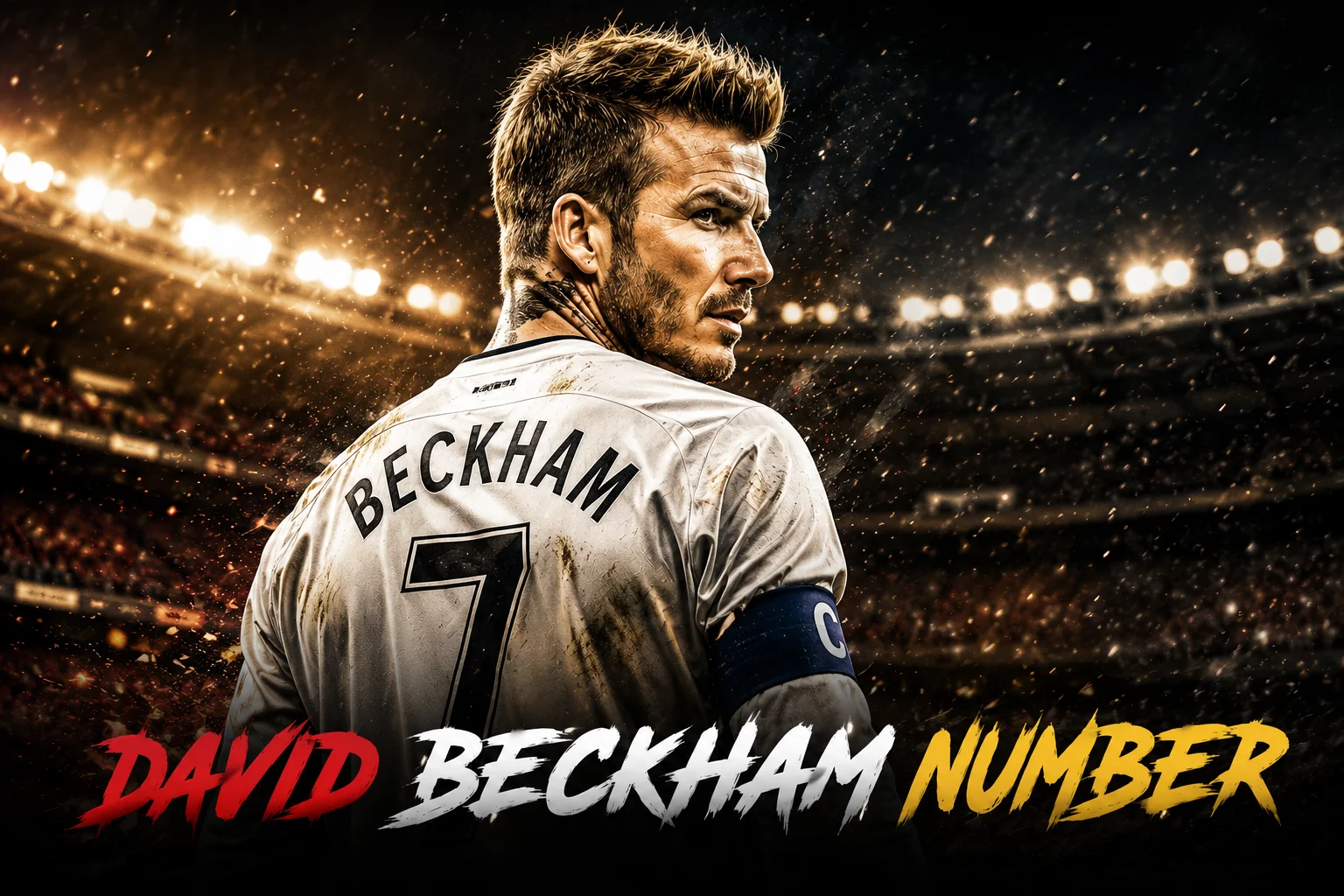
When Beckham transferred to Real Madrid in 2003, he faced an unexpected challenge regarding his jersey number. The famous No. 7 shirt was already worn by club legend Raúl González.
Rather than creating controversy, Beckham respectfully chose a new number. This decision demonstrated his professionalism and willingness to adapt within one of football’s biggest clubs.
The move marked a new chapter in his career and introduced fans to a different David Beckham number.
Why Beckham Wore Number 23
At Real Madrid, Beckham selected No. 23. He has explained that the choice was inspired by basketball icon Michael Jordan, who famously wore the same number throughout much of his legendary NBA career.
The No. 23 shirt quickly became hugely popular among Real Madrid supporters. Beckham’s arrival helped expand the club’s global profile, particularly in Asia and North America.
Sales of the No. 23 jersey surged as fans embraced Beckham’s new identity in Spain.
Success With Number 23
Although his role changed at Real Madrid, Beckham remained a key contributor. He played alongside stars such as Zinedine Zidane, Ronaldo Nazário, Roberto Carlos, and Raúl.
His final season with the club ended on a high note when Real Madrid won the 2006–07 La Liga title. The No. 23 jersey became almost as recognizable as his earlier No. 7 shirt.
David Beckham Number at LA Galaxy, AC Milan, and PSG
Continuing With Number 23
Following his move to LA Galaxy in Major League Soccer, Beckham continued wearing No. 23. The number had become part of his personal brand after his successful spell at Real Madrid.
His arrival transformed soccer’s profile in the United States. Beckham helped attract international attention to MLS and contributed significantly to the league’s growth.
The No. 23 shirt became one of the most popular jerseys in American soccer history.
Time at AC Milan
During his loan spells with AC Milan, Beckham also wore No. 32 and later No. 23 during different periods with the club.
Although his stay in Italy was relatively brief, he impressed many observers with his professionalism and technical quality. His versatility allowed him to contribute effectively despite being in the later stages of his playing career.
Final Number at Paris Saint-Germain
Beckham’s final professional club was Paris Saint-Germain. During his short but memorable stint in France, he wore the No. 32 shirt.
His time at PSG concluded with a Ligue 1 title and an emotional retirement announcement in 2013. The No. 32 jersey became the last number worn during one of football’s most celebrated careers.
Every Major David Beckham Number
Club and Country Jersey Numbers
Throughout his career, Beckham became associated with several important squad numbers:
- Number 7 – Manchester United
- Number 7 – England
- Number 23 – Real Madrid
- Number 23 – LA Galaxy
- Number 23 – Parts of his AC Milan career
- Number 32 – AC Milan
- Number 32 – Paris Saint-Germain
Each number reflects a different chapter of his journey from talented academy graduate to global sporting icon.
Which Number Is Most Iconic?
While Beckham wore several jersey numbers, No. 7 remains the most iconic. It represents his rise at Manchester United, his peak years with England, and some of the greatest moments of his career.
For younger fans, No. 23 may also hold special significance because of his time at Real Madrid and LA Galaxy. However, the connection between Beckham and No. 7 remains unmatched.
Influence Beyond Football
The popularity of Beckham’s shirt numbers extended beyond sport. His jerseys became fashion items, collector’s pieces, and symbols of football culture worldwide.
Few athletes have had such a profound influence on the commercial and cultural significance of a squad number. Beckham helped transform football shirts into global lifestyle products.
Frequently Asked Questions
Q: What was David Beckham’s most famous number?
A: The most famous David Beckham number was No. 7. He wore it for Manchester United and England during many of the greatest moments of his career.
Q: Why did David Beckham wear number 23 at Real Madrid?
A: Beckham chose No. 23 because Real Madrid’s No. 7 shirt was already worn by Raúl. He also admired basketball legend Michael Jordan, who famously wore No. 23.
Q: What number did David Beckham wear for England?
A: Beckham primarily wore No. 7 for England and became one of the most recognizable players ever associated with that jersey.
Q: What number did David Beckham wear at LA Galaxy?
A: He wore No. 23 during his time with LA Galaxy, helping raise the profile of Major League Soccer around the world.
Q: What was David Beckham’s final jersey number?
A: Beckham’s final professional jersey number was No. 32, which he wore for Paris Saint-Germain before retiring in 2013.
Conclusion
The David Beckham number changed throughout his career, but each jersey became part of football history. From the legendary No. 7 shirt at Manchester United and England to the famous No. 23 jersey at Real Madrid and LA Galaxy, Beckham transformed ordinary squad numbers into globally recognized symbols.
His influence extended far beyond goals and assists. The numbers he wore became connected to unforgettable matches, iconic free kicks, and a worldwide football legacy that continues to inspire fans today. Whether remembered as Manchester United’s celebrated No. 7 or Real Madrid’s popular No. 23, David Beckham’s jersey numbers remain an enduring part of the story of one of football’s greatest icons.