
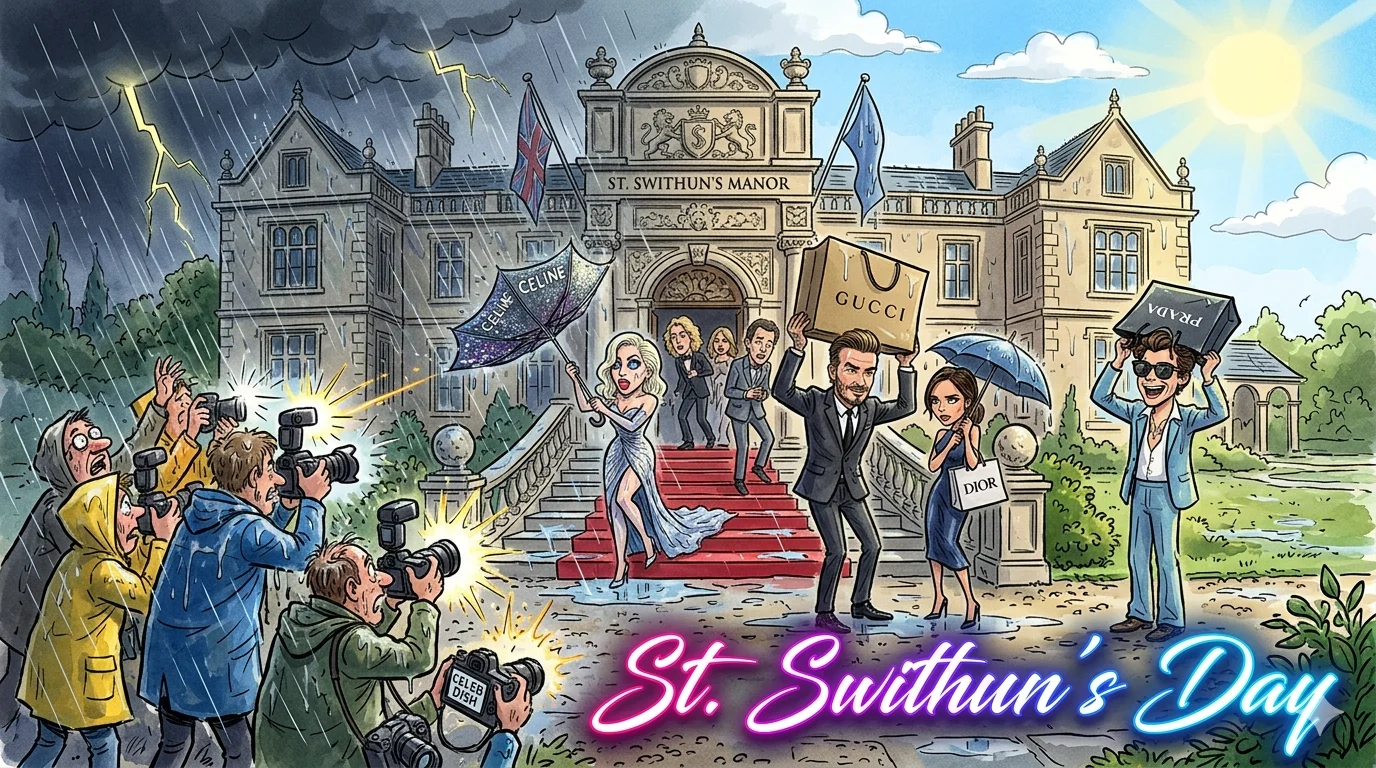
St Swithuns Day is observed every year on July 15 and is widely known in English culture for its famous weather-related folklore. According to tradition, the weather on St Swithuns Day is believed to predict the weather pattern for the following forty days.
Although modern science does not support this belief, St Swithuns Day remains an important cultural and historical observance. It is linked to Saint Swithun, a ninth-century bishop of Winchester known for his humility and charitable life. Over time, religious history and folklore blended together, turning St Swithuns Day into one of the most famous weather traditions in Britain.
This article explores the origins, meaning, history, and modern relevance of St Swithuns Day in detail.
What Is St Swithuns Day?
Meaning of St Swithuns Day
St Swithuns is a traditional feast day dedicated to Saint Swithun, an Anglo-Saxon bishop of Winchester. It is observed annually on July 15 and originally marked the translation of his remains into Winchester Cathedral in 971.
Over centuries, St Swithuns became more widely known for its weather folklore rather than its religious significance. The day is now associated with the belief that weather conditions on July 15 influence the following forty days of weather.
This transformation from a religious observance into a popular weather proverb makes St Swithuns one of the most interesting examples of cultural folklore in England.
Who Was Saint Swithun?
Saint Swithun was a Bishop of Winchester during the reign of King Æthelwulf in the ninth century. He was known for his humility, kindness, and dedication to helping ordinary people.
Historical accounts suggest he preferred a simple burial rather than a grand tomb, choosing to be laid to rest outside where rain could fall upon his grave. This detail later became an important part of the St Swithuns legend.
After his death, his reputation for holiness grew, and he was later canonized as a saint. His shrine in Winchester became a popular pilgrimage site in medieval England.
Why July 15 Matters
The significance of July 15 comes from the relocation of Saint Swithun’s remains to Winchester Cathedral in 971. According to legend, heavy rain fell on this day, which led to the belief that weather on St Swithuns has long-term importance.
This connection between a historical event and weather folklore is what made St Swithuns so famous in English tradition.
The Weather Legend of St Swithuns Day
The Forty-Day Rule
The most famous saying linked to is:
“If it rains on St Swithuns Day, it will rain for forty days; if it is fair, it will stay fair for forty days.”
This simple rhyme became widely known in English folklore and was passed down through generations. It reflects how people once tried to understand seasonal weather patterns before modern forecasting existed.
St Swithuns Day became a cultural reference point for predicting summer weather across Britain.
Is the Prediction Accurate?
Modern meteorology does not support the idea that weather on a single day can determine conditions for forty days. Weather systems depend on complex atmospheric patterns that change constantly.
However, some seasonal stability in European summer weather may have contributed to the belief in St Swithuns Day folklore.
Despite the lack of scientific evidence, the tradition continues because it is simple, memorable, and deeply rooted in cultural storytelling.
Why the Myth Still Exists
St Swithuns Day remains popular because people enjoy connecting nature with tradition. Before scientific forecasting, communities relied on observation and folklore to understand weather patterns.
Even today, the saying survives as a cultural curiosity and is often mentioned in news and weather reports every July.
Saint Swithun and His Legacy
A Humble Religious Figure
Saint Swithun served as Bishop of Winchester and was respected for his modest lifestyle and dedication to helping others. He was not known for political power or wealth but for kindness and service.
His humility became a key part of his identity and later influenced how St Swithuns Day traditions developed over time.
Pilgrimage and Religious Influence
After his death, miracles were reportedly associated with his shrine in Winchester. This led to widespread pilgrimages during the medieval period.
Winchester became an important religious site, and Saint Swithun’s reputation spread across England.
Cultural Importance Today
Although religious observance of St Swithuns Day has declined, his legacy remains strong in English history and folklore.
His name continues to be recognized largely because of the famous weather tradition associated with him.
Modern Meaning of St Swithuns Day
Today’s Observance
In modern times, St Swithuns Day is mainly recognized as a cultural and historical reference rather than a religious holiday.
Some churches and heritage groups still acknowledge the day, especially in Winchester, where Saint Swithun served as bishop.
Media and Weather Discussions
Each year, St Swithuns Day is mentioned in newspapers and weather reports, often with playful reference to the old proverb.
Meteorologists sometimes comment on whether the traditional prediction appears to hold true, even though it has no scientific basis.
Continued Cultural Relevance
St Swithuns Day remains relevant because it connects history, religion, and folklore in a simple story.
It shows how traditional beliefs can survive for centuries, even in a modern scientific world.
St Swithuns Day in Folklore
Seasonal Weather Beliefs
St Swithuns Day is part of a broader tradition of European weather folklore. Many cultures created sayings linking specific dates to weather patterns.
These beliefs helped people understand seasonal changes before modern science existed.
Symbol of English Tradition
Today, St Swithuns Day is seen as part of England’s cultural identity and storytelling tradition.
It reflects how people historically interpreted nature and time through observation and belief.
Frequently Asked Questions
Q: What is St Swithuns Day?
A: St Swithuns Day is a traditional English feast day observed on July 15, known for its famous weather folklore connected to Saint Swithun.
Q: Why is St Swithuns Day linked to weather?
A: It is linked to the belief that weather on July 15 predicts the weather for the next forty days, based on old English folklore.
Q: Was Saint Swithun a real person?
A: Yes, Saint Swithun was a ninth-century Bishop of Winchester known for his humility and charitable work.
Q: Is the St Swithuns Day weather rule true?
A: No, modern science does not support it. It is considered folklore rather than an accurate weather prediction method.
Q: How is St Swithuns Day observed today?
A: It is mainly remembered through cultural references, historical discussions, and occasional church acknowledgments.
Conclusion
St Swithuns Day is a fascinating blend of history, religion, and folklore that has survived for centuries. Originating from the life of Saint Swithun, it evolved into one of England’s most famous weather traditions.
Although modern science has replaced old weather beliefs, the story of St Swithuns Day continues to be shared every July. It remains a reminder of how people once interpreted nature through simple but meaningful traditions.
Today, St Swithuns Day stands as both a historical observance and a cultural legend that still captures public imagination.